A name helps you recognize your ball. A readable phone number or a SoccQR return page also gives a stranger a way to reach you. Make the next step clear for someone who wants to help.
Loading your guide…

Guide
Soccer balls get mixed up, left behind, and picked up by mistake every week. The right label does not just show a name; it gives the finder a clear way to contact you.
A name helps you recognize your ball. A readable phone number or a SoccQR return page also gives a stranger a way to reach you. Make the next step clear for someone who wants to help.
Durability outdoors, visible owner identity, and a clear path for the finder to reach you; ideally without needing to already know your phone number.
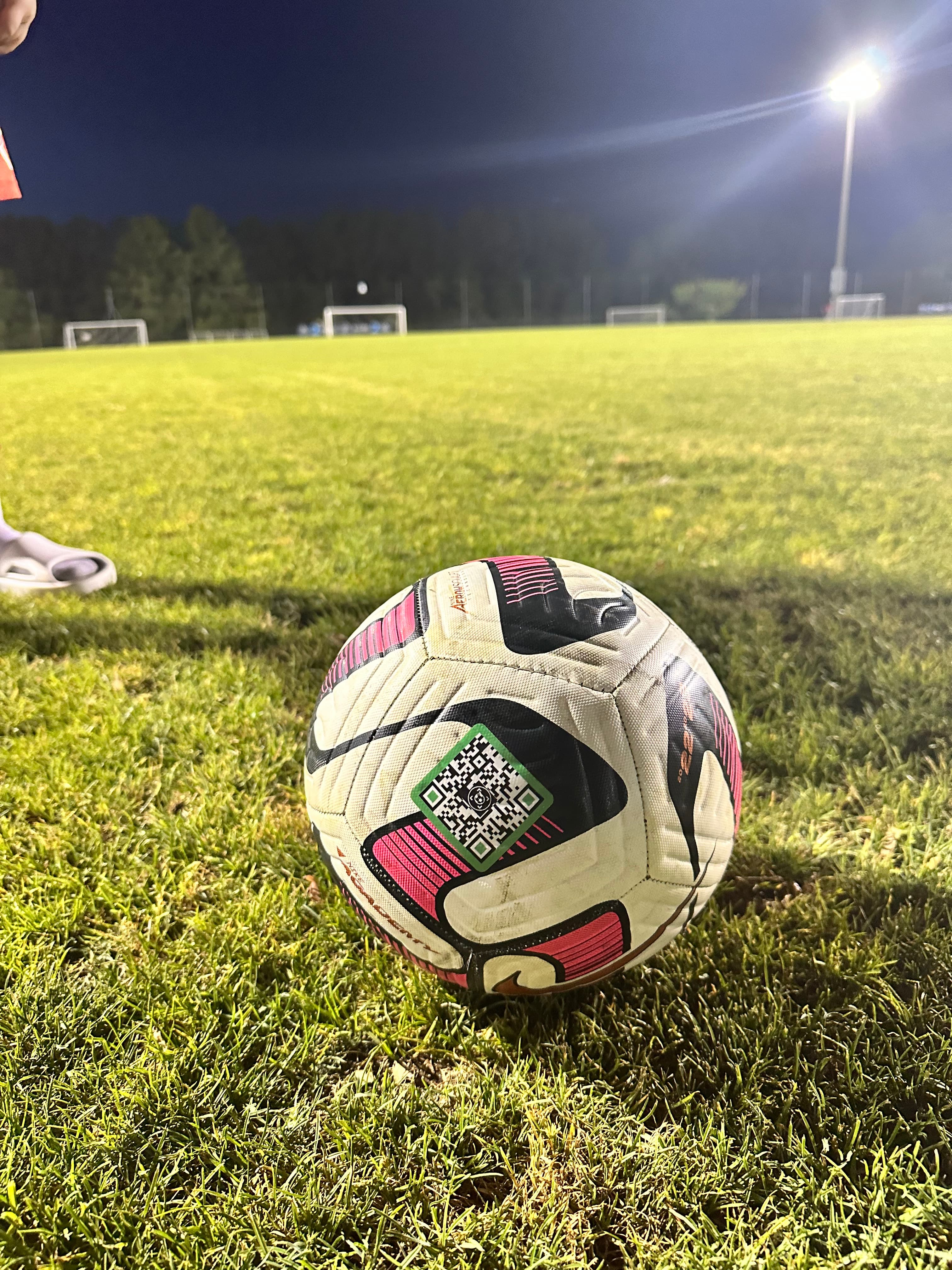
It sounds simple, but most players and parents skip it; or do it in a way that doesn't actually help when the ball goes missing.
Soccer balls get picked up by mistake, left behind, or swapped with similar equipment at practice fields, tournaments, carpools, and gyms. Labeling the ball before those situations gives a finder useful information when a mix-up happens.
A ball can be picked up by mistake or left with venue staff. If it has no useful contact information, the person who finds it has an extra problem to solve before arranging a return.
A good label does not just say "this is my ball." It identifies the ball and gives the finder a clear way to contact its owner.
Most people default to a marker or a sticker. Here is what each method actually delivers when a stranger finds your ball.
Works for
Limitations
Verdict: A readable name and contact number can help; keep both current.
Works for
Limitations
Verdict: Adds information, but the material may not suit a ball surface.
Works for
Limitations
Verdict: Useful for spotting your ball in a pile, but weak for getting it returned.
Works for
Limitations
Verdict: Adds a direct contact path instead of identification alone.
A written phone number can help a finder too. SoccQR adds an editable return page, contact choices, and found alerts.
When a finder scans a SoccQR tag, they do not just see a name. They see a full page; the ball title, a photo so they can confirm it is the right one, a short message from the owner, and one-tap options to call, text, or email. The whole thing opens in the phone's browser. No app to install, no account to create.
From the finder's perspective, the page provides the ball details and a direct way to contact its owner.
From the owner's side, the ball return page can be updated from the account. If your phone number changes, update it there without replacing the physical tag on the ball.
Apply the tag to a clean, dry ball panel and allow 24 hours before hard play.
Change the ball name, photo, message, or contact options from your account without replacing the tag.
A compatible phone camera opens the return page in a browser. No finder account is required.
The text on the return page is just as important as the tag itself. Here is what works.
Something like "This is my training ball. Please text me if you found it; I appreciate it!" is all you need. Finders read fast.
A photo helps a finder confirm that the ball they found matches the return page.
Choose the contact options you are comfortable sharing. Enabling call, text, or email lets a finder reach you through the methods you select.
Instead of just your name, try "Romeo's Adidas Tiro" or "Blue Puma training ball." Specific names help when multiple balls are involved.
If you want to skip the full read, here is what actually matters.
A name and readable contact number can help get a ball returned. SoccQR adds a photo, an editable message, contact choices, and a found-alert option to the same physical tag.
If the ball is worth identifying, give it a clear label and a direct contact path for the finder.
Ships as packs for one player, a family, or a full team.
Shop tag packsOpen the example tag page to see exactly what a finder sees after scanning.
Open exampleCompare soccer ball labeling options and see when a QR return page helps.
View label guideUpdated by SoccQR.